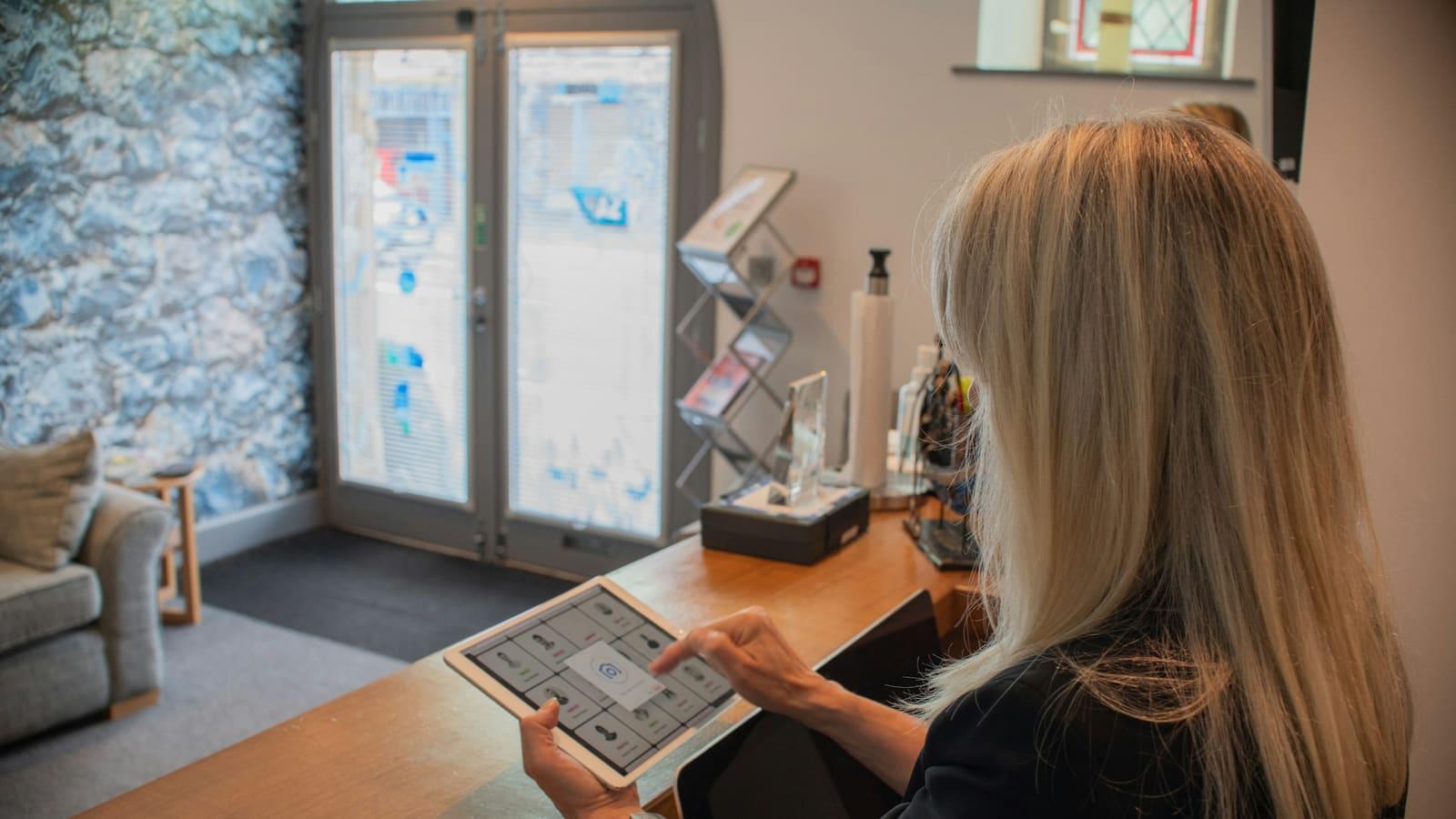
Sam is the office manager at a busy dental practice. At 8:40 on a Monday, between unlocking the front door and the first patient, she opened an email with the subject line “Invoice 3381 — 12 days overdue.” It was from the practice’s equipment servicing company.
Her first reaction was a flush of embarrassment. Her second was irritation: she was almost certain she had paid that invoice weeks ago. She started typing a reply that began, “We already paid this,” and then stopped, because she was not entirely sure.
Sam is a fictional example, but most people who handle bills have been in her position. Late and mismatched payments are routine. In the June 2026 quarter, US small businesses were paid an average of 8.5 days after their agreed terms, according to Xero Small Business Insights. Many of those reminders reach customers who intended to pay on time. See our late payment statistics for more figures.
A good reply takes about three minutes. It protects your relationship with the supplier, your own records and, sometimes, your bank account. Here is how to write one.
Step 1: Check that the reminder is genuine
Before you reply, or pay, make sure the reminder comes from the supplier you know.
Fake invoices and payment-redirection emails are a common fraud. The FBI’s 2024 Internet Crime Report recorded 21,442 business email compromise complaints, with reported losses of about USD 2.77 billion. Many of these schemes look exactly like an ordinary payment reminder.
Look for these warning signs:
- An unfamiliar address. The sender’s address is slightly different from the one the supplier usually uses, such as an extra letter or a different domain.
- New payment details. The email asks you to pay into a new or “updated” bank account.
- Unusual pressure. The tone is unusually urgent, or the email asks you to keep the matter confidential.
- An unknown invoice. The invoice number or amount does not match anything in your records.
- Unexpected links or attachments. A link asks you to sign in, or an attachment asks you to enable content.
If anything looks wrong, do not reply to the email or use its contact details. Call the supplier on a phone number you already have and ask them to confirm. A genuine supplier will not mind.
Step 2: Check your own records
Next, find out what actually happened. Search your accounting system, bank statements or payment platform for:
- The invoice. Was it received, approved and entered?
- The payment. Was it made, and on what date?
- The reference. Which payment reference or transaction ID was used?
- Any open questions. Is there a dispute or a purchase order still waiting?
Two minutes here saves a week of back-and-forth. It also stops you promising something you cannot deliver.
Step 3: Write a short, factual reply
Whatever the situation, a good reply has the same four parts:
- Thank them for the reminder. It costs nothing and sets a cooperative tone.
- State the status. Say whether it is paid, scheduled, queried or waiting on something.
- Give the detail they need. Include a payment date, a reference, a question or a corrected contact.
- Say what happens next, and by when.
Keep it short. The supplier needs facts they can act on, not an apology or a long explanation.
Reply examples for every situation
Replace the bracketed placeholders with the details from your own records.
1. You have already paid
Subject: Re: Invoice [number]: payment sent on [date]
Hi [name],
Thanks for the reminder. Our records show we paid invoice [number] for [amount] on [date], using reference [payment reference].
Could you check whether it has been received and matched on your side? Please let me know if you need anything else to locate it.
Thanks,
[Your name]
Give the payment reference if you have it. It is the single most useful detail for the supplier’s accounts team. You do not need to send a screenshot of your bank statement, which may expose other transactions.
2. Payment is scheduled
Subject: Re: Invoice [number]: scheduled for [date]
Hi [name],
Thanks for following up. Invoice [number] is approved and scheduled for payment on [date] in our next payment run.
I’ll send the reference once it has been processed.
Best regards,
[Your name]
Only give a date you are confident in. If you are not sure, say when you will know: “I’ll confirm the payment date by Thursday.”
3. You need more time
Subject: Re: Invoice [number]: request to agree a payment date
Hi [name],
Thanks for the reminder about invoice [number]. I’m sorry for the delay. We are not able to pay the full [amount] this week.
Could we agree to pay [amount] on [date] and the remaining [amount] on [date]? I’m happy to discuss another arrangement if that works better for you.
Thanks for your understanding,
[Your name]
Suggest a specific plan rather than asking for “a little more time.” A supplier can agree to dates. An open-ended delay is much harder to accept.
4. You never received the invoice
Subject: Re: Invoice [number]: please resend
Hi [name],
Thanks for getting in touch. I can’t find invoice [number] in our system. It may have gone to a different address.
Could you resend it to [accounts payable email]? We’ll process it as soon as it arrives.
Thanks,
[Your name]
Give the right address for future invoices too. That one sentence can prevent the same reminder next month.
5. Something on the invoice is wrong
Subject: Re: Invoice [number]: query about [line item]
Hi [name],
Thanks for the reminder. Before we pay invoice [number], could you look at [specific line item or amount]? Our records show [what you expected, for example a different quantity or an agreed price].
We are happy to pay the undisputed [amount] now while we resolve this. Could you send a corrected invoice or let me know your view?
Thanks,
[Your name]
Be specific about what you dispute, and offer to pay the part you agree with. Disputing a single line is no reason to hold back the whole invoice. Doing so can turn a small query into a bigger problem.
6. It is waiting on an approval or purchase order
Subject: Re: Invoice [number]: waiting on approval
Hi [name],
Thanks for checking. Invoice [number] is waiting for approval from [team or role]. I’ve followed up internally and expect an answer by [date].
If you can add our purchase order number, [PO number], to the invoice, that should speed things up.
Best regards,
[Your name]
7. You have paid part of the balance
Subject: Re: Invoice [number]: part payment sent
Hi [name],
Thanks for the reminder. We paid [paid amount] toward invoice [number] on [date], reference [payment reference].
The remaining [balance] is scheduled for [date]. Please let me know if your records show anything different.
Thanks,
[Your name]
8. You are the wrong person
Subject: Re: Invoice [number]: correct contact
Hi [name],
Thanks for your email. Supplier payments are handled by [name or team], who I’ve copied here. In future, please send invoices and reminders to [accounts payable email].
Thanks,
[Your name]
9. You simply want a status check (“please advise”)
Sometimes the reminder is vague, and you need the supplier to confirm what they think is outstanding.
Subject: Re: Payment reminder: could you confirm the details?
Hi [name],
Thanks for your email. Could you confirm which invoice or invoices this relates to, the amounts outstanding and the due dates on your records? I’ll check them against ours and reply with a payment update.
Thanks,
[Your name]
This is a polite version of the familiar “please advise the status of payment.” It also helps when you receive a statement covering several invoices and need to reconcile them.
What to avoid in your reply
- Ignoring the reminder. Silence is the reply most likely to lead to a firmer letter. Even “We are looking into this and will reply by Friday” helps.
- Promising a date you cannot keep. A missed promise does more damage than an honest “We need until the end of the month.”
- Over-sharing. Do not send full bank statements, internal approval threads or personal financial details. Usually a date and a reference are enough.
- Arguing in a crowded thread. If there is a real disagreement, move it to a short call or a direct email with the right people.
- Paying into new bank details from the reminder. Always verify changed payment instructions by phone, as described above.
If you send payment reminders yourself
Replies like these are what a supplier hopes for, and they are easy to mishandle. A reply saying “we paid on the 3rd” is not the same as a verified payment. A reply asking for a corrected invoice means further reminders should stop until it is sent.
In Rinvayo, customer replies arrive in the connected Gmail or business mailbox your team already uses. Rinvayo does not read incoming replies. When a customer promises a date or raises a question, pause the invoice’s reminder sequence with a short reason, then deal with the reply. A customer saying they have paid does not mark the invoice as paid. Record the payment once it has been verified, and Rinvayo stops future reminders when a verified payment settles the invoice in full.
See automated invoice reminders for how sequences, pauses and settlement work. See invoice and payment tracking for recording full and partial payments.
What Sam sent
Sam closed her half-written reply and spent two minutes in the practice’s banking portal. She had paid, eleven days before the due date, but she had used the job number from the service report as the reference, not the invoice number.
She sent the first example above, with the payment date and the job-number reference. Within an hour, the supplier replied that they had found the payment sitting unmatched and had applied it. They apologized for the reminder. Sam made a note to use invoice numbers as references from then on.
The exchange took two emails. It might have taken five if she had sent her first, defensive draft.
Common questions
Do I have to reply to a payment reminder?
You are not usually obliged to, but replying is almost always in your interest. A short update stops further reminders, keeps the relationship smooth and creates a record of what you told the supplier.
How quickly should I reply to a payment reminder?
Ideally within one or two business days. If you need longer to check, send a short holding reply that says when you will update them.
What do I say if I have already paid?
Thank them, give the payment date, amount and reference, and ask them to check it against their records. Example 1 above shows the full wording.
How do I reply if I can’t pay yet?
Be honest and specific. Acknowledge the invoice, explain that you cannot pay in full yet, and propose dates, such as an instalment plan. Example 3 above shows one approach.
What if I think the reminder is a scam?
Do not reply, click links or pay. Contact the supplier using details you already have, such as a phone number from an earlier invoice or contract, and ask them to confirm. You can report suspected fraud to your bank and, in the US, to the FBI’s Internet Crime Complaint Center.